Parts That Match Your Exact Specifications
Plasma Table Custom Parts in Pearland for fabrication projects requiring precise metal components
JT-Fabrication & Welding produces custom metal parts using CNC plasma table technology in Pearland, cutting components to your exact dimensions from flat steel, aluminum, and stainless steel plate. You need this service when off-the-shelf parts don't fit your application—whether you're repairing industrial equipment, building custom machinery, or fabricating structural components that require specific hole patterns, edge profiles, or mounting configurations. The plasma table translates your design file or drawing into a finished part with clean edges and consistent tolerances across multiple pieces.
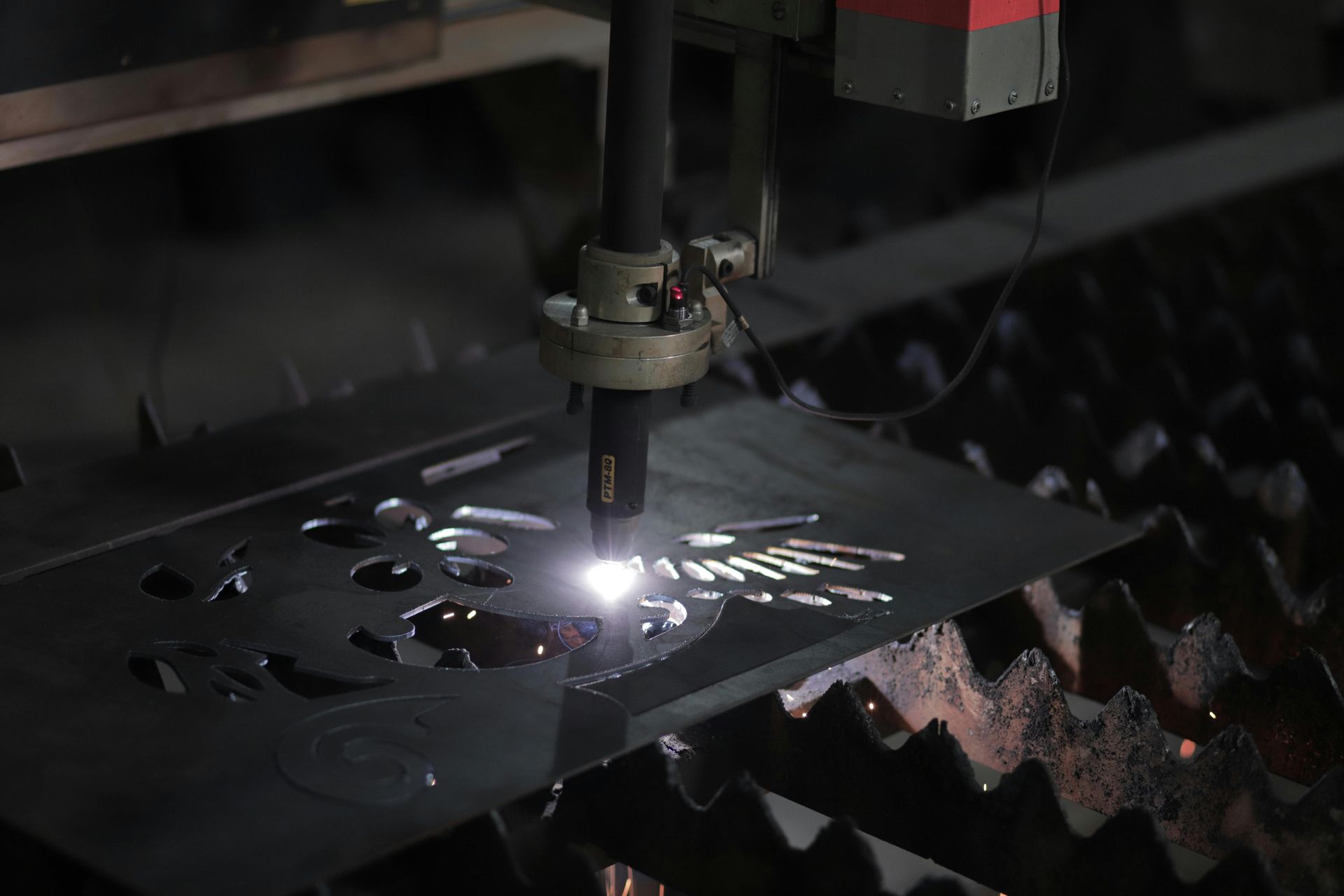
Plasma cutting uses an electrically conductive gas stream heated to extremely high temperatures to melt through metal, while the gas jet blows away the molten material to create the cut path. This process handles material thicknesses from thin gauge sheet up to plate stock, producing parts with edge quality that often eliminates secondary grinding or machining for many applications. The CNC control system follows your design precisely, repeating identical cuts when you need matching components or replacement parts.
Request a quote with your design file or dimensional sketch to confirm material availability and cutting specifications.
How Plasma Table Fabrication Works for Custom Components
The process begins with your design file—typically a DXF or DWG format exported from CAD software—which the CNC plasma system converts into torch path instructions. The table positions the cutting torch above the metal plate, initiates the plasma arc, and follows the programmed path at speeds calibrated to the material type and thickness. For projects requiring multiple identical parts, the system nests your components efficiently across the plate material to minimize waste and reduce your material costs.
After cutting, you receive parts with edges that show the characteristic plasma cut finish—a slight bevel angle and minimal dross attachment on the bottom edge. Most fabrication and welding applications accept these parts directly without additional machining, though edge grinding remains an option when you need perfectly square edges or a smoother finish for aesthetic reasons. The dimensional accuracy stays within tolerances appropriate for structural welding, mounting brackets, equipment guards, and machinery components.
The service works with your material or shop stock depending on project requirements and material availability. Thicker plate materials produce wider kerf widths—the amount of material removed by the cutting process—which the system compensates for automatically to maintain your specified finished dimensions. Material selection affects cut quality, with mild steel producing the cleanest edges and stainless steel requiring specific torch settings to minimize heat discoloration.
What Fabricators Ask About Custom Plasma Cutting
Projects in Pearland often involve replacement parts for industrial equipment, custom mounting plates, and structural components where standard sizes don't match the application. These questions address the practical considerations for plasma table work.
What file format works best for plasma table cutting?
DXF and DWG formats exported from CAD software translate directly to the CNC system, though the shop can work from dimensioned sketches or existing parts that need duplication. Vector-based files produce the most accurate results because they define exact cut paths rather than requiring interpretation from raster images or photos.
How does material thickness affect the cutting process?
Thinner materials cut faster with narrower kerf widths and minimal heat distortion, while thicker plate requires slower torch travel speeds and produces wider cuts with more pronounced edge bevel. The plasma system handles material from 16-gauge sheet up to plate thickness, with optimal edge quality typically occurring in the quarter-inch to half-inch range for mild steel.
What edge finish should I expect from plasma cutting?
The top edge shows a slightly rounded profile from the arc entry point, while the bottom edge typically has a sharper corner with minimal dross—solidified metal droplets—that breaks off easily with a hammer tap or wire wheel. The cut face itself displays vertical drag lines consistent with the torch travel direction, acceptable for most welding and bolted assembly applications.
How quickly can custom parts be produced?
Single components or small batches often complete within days once material is confirmed and design files are received, since the CNC system cuts parts significantly faster than manual layout and cutting methods. Multiple identical pieces take only marginally longer than single parts because the table repeats the same cut path without additional setup.
Can the plasma table cut holes and interior shapes?
Interior cutouts require pierce points where the torch initiates the arc through the material before following the cut path, which leaves a small witness mark at each pierce location. The system handles complex interior geometry including bolt holes, slots, and relief notches, with minimum hole diameter determined by material thickness and torch kerf width.
JT-Fabrication & Welding produces plasma table parts for projects across Pearland and Pasadena when standard components don't match your specifications. Schedule a consultation with your design file or sketch to confirm material options and review cutting requirements for your application.